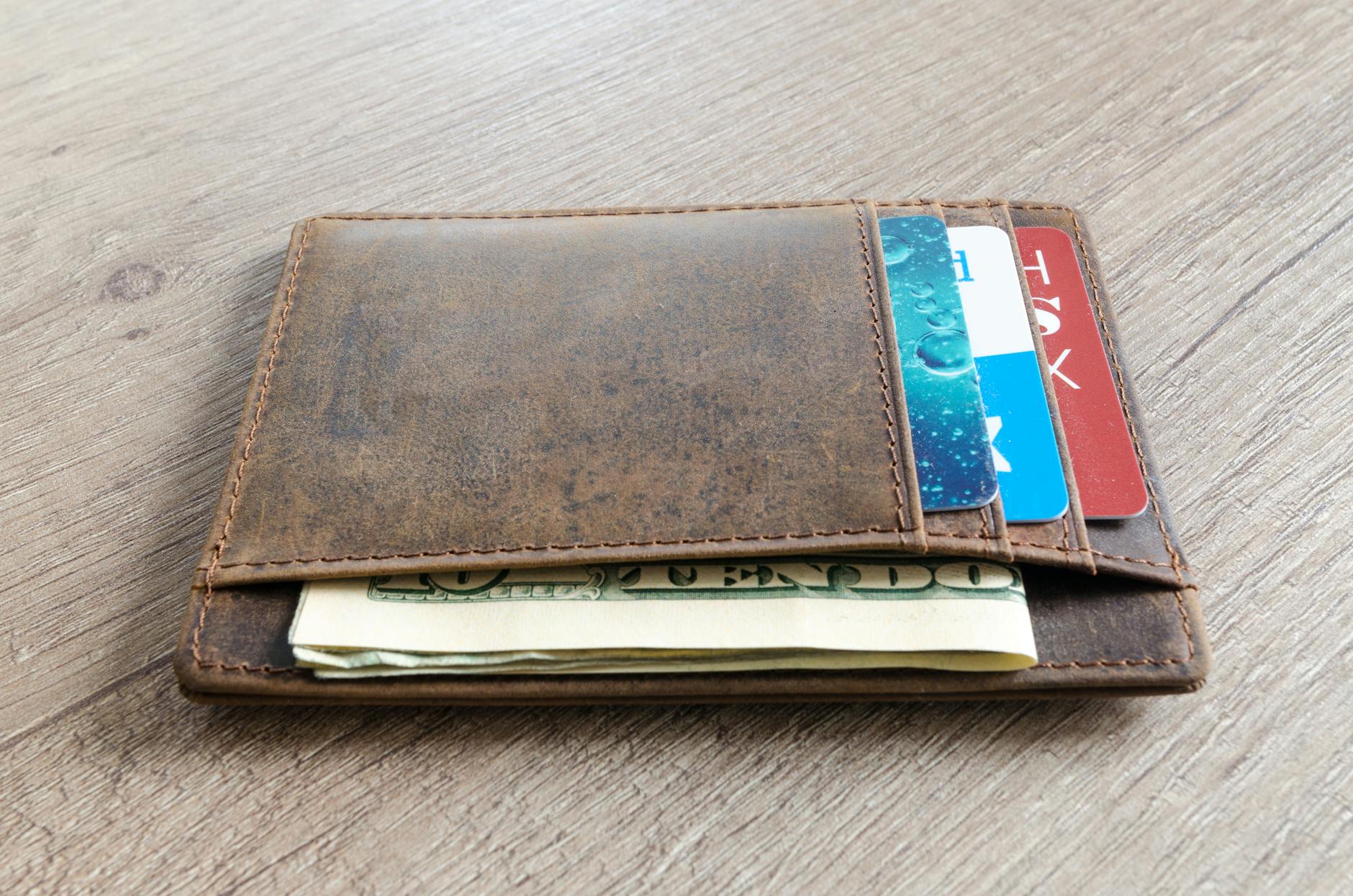
Photo by Lukas Blazek on Pexels
1. The Real Cost of the Minimum Payment
When you glance at your credit‑card statement and see a "minimum payment" of $50, it feels manageable. But that number is deceptive. Most credit‑card issuers calculate the minimum as either a flat fee (often $25) plus 1% of the balance, or 2%–3% of the balance, whichever is higher. Let’s break down what that means for a typical borrower.
Example: Jane carries a $5,000 balance at a 19.99% APR. Her minimum payment is 2% of the balance, or $100, whichever is higher. If she pays only $100 each month, the repayment schedule looks like this:
- Month 1 interest: $5,000 × 0.1999 ÷ 12 ≈ $83.29
- Principal reduction: $100 – $83.29 = $16.71
- New balance: $5,000 – $16.71 = $4,983.29
Repeating this pattern, it would take Jane over 12 years to clear the debt, and she would pay roughly $9,800 in total – almost double the original balance.
2. How Interest Compounds Against You
Credit‑card interest compounds daily. Even a small balance can balloon if you only meet the minimum. Consider a more modest $1,200 balance at 22% APR.
- Minimum payment (2%): $24
- Daily interest rate: 0.22 ÷ 365 ≈ 0.0006027
- First‑day interest: $1,200 × 0.0006027 ≈ $0.72
After the first month, the balance becomes $1,200 + $0.72 × 30 – $24 ≈ $1,178.60. The next month’s interest is calculated on $1,178.60, not the original $1,200, creating a snowball effect. After 24 months of paying only $24, the total paid is $576, but the remaining balance is still about $800 – meaning the debt will linger for years.
3. The Psychological Trap: False Sense of Progress
Paying the minimum creates a “progress illusion.” The statement shows a decreasing balance, but the reduction is minuscule. This can lead to complacency, encouraging further spending because the debt feels under control.
Research from the Federal Reserve shows that consumers who pay only the minimum are 2.5× more likely to carry a balance month‑to‑month and 3× more likely to have a credit‑utilization ratio above 30%, which can hurt credit scores.
In addition, many issuers offer promotional “0% APR for 12 months” deals. If you continue to pay only the minimum during the promo, you’ll still owe the principal when the rate resets, and the accrued interest will be calculated on a larger balance.
4. Actionable Steps to Escape the Minimum‑Payment Cycle
Breaking free requires a plan. Below are concrete steps you can implement today:
- Calculate the true cost: Use an online credit‑card payoff calculator. Input your balance, APR, and a payment amount higher than the minimum to see how many months you’ll save.
- Set a realistic target payment: Aim for at least 5% of the balance or $200, whichever is larger. In Jane’s $5,000 example, a $250 payment would cut the payoff time to 3.5 years and reduce total interest to about $2,300.
- Automate higher payments: Schedule a recurring payment that exceeds the minimum by a fixed amount. Treat it as a non‑negotiable expense.
- Prioritize high‑interest cards: If you have multiple cards, focus extra cash on the one with the highest APR while maintaining minimums on the others (the “avalanche” method).
- Consider a balance‑transfer: Move the debt to a card with a 0% intro APR and a low transfer fee (typically 3%‑5%). Pay off the transferred balance before the promo ends.
- Trim discretionary spending: Redirect funds from non‑essential purchases (e.g., dining out, subscription services) to your credit‑card payment.
- Monitor progress monthly: Review your statement, note the interest saved, and celebrate milestones (e.g., every $500 reduction).
FAQ
Q1: Will paying a little more than the minimum make a big difference?
A: Absolutely. Even an extra $20 per month can shave years off a payoff schedule. For a $3,000 balance at 20% APR, paying $50 (minimum) versus $70 reduces the payoff time from 11 years to 5.5 years and cuts total interest from $5,600 to $2,300.
Q2: Is a balance‑transfer always the best option?
A: Not always. Balance transfers can be effective if you can pay off the transferred amount before the intro period ends and if the transfer fee doesn’t outweigh the interest savings. Compare the fee (e.g., 3% of $5,000 = $150) with the interest you’d otherwise pay.
Q3: How can I avoid falling back into the minimum‑payment habit?
A: Build a small emergency fund (≈$1,000) to cover unexpected expenses, so you’re not forced to rely on credit cards. Also, set up alerts for when your balance exceeds a certain percentage of your credit limit, and commit to a “no‑new‑debt” rule until you’re below 30% utilization.
Found this helpful? Share it with someone who needs it! 💰